Grand Rapids Public Museum, John Ball Zoo Among Researchers Awarded Grant To Research Lake Sturgeon
The Grand River has been the subject of much conversation over the past couple of years, with research on restoring the rapids and an extensive study to identify and relocate endangered native mussels. That extended to a discovery earlier this year of rare mussels in the Plaster Creek. Suffice it to say, the Grand River is home to a unique ecosystem crucial to the environment.

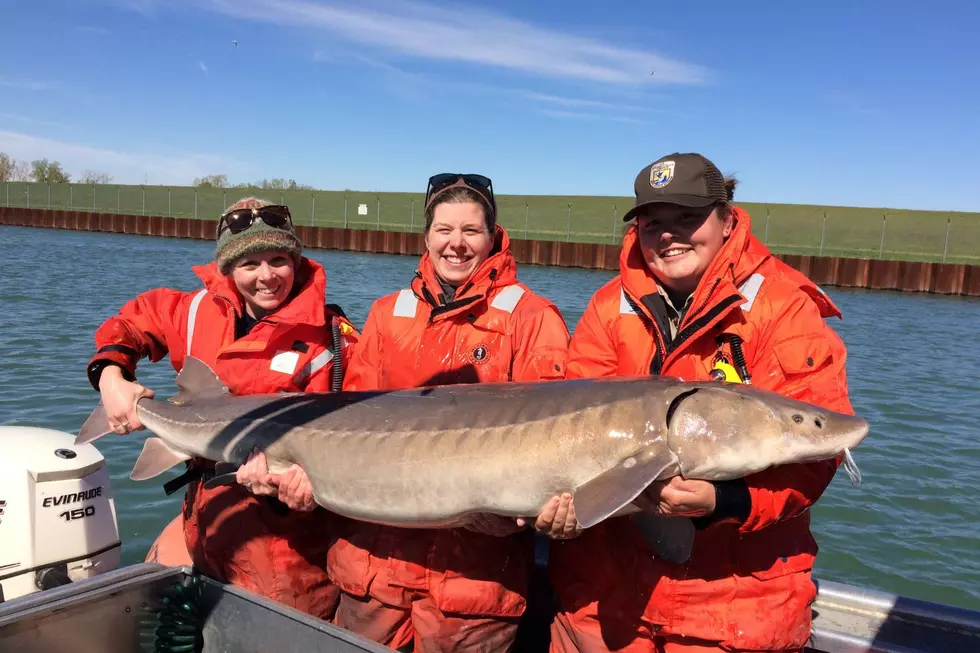
For the last six years, the Grand Rapids Public Museum (GRPM), John Ball Zoo (JBZ), Grand Valley State University (GVSU), and Encompass Socio-ecological Consulting LLC (ESC)have worked together to research Michigan's most iconic fish, the Lake Sturgeon. Now, even more crucial research will continue, as these researchers have been awarded a grant to continue collecting data in the river.

Grant Awarded To GRPM, JBZ, GVSU + More
According to a joint press release by the research partners, the grant was awarded by the Great Lakes Fishery Trust "to support sonar technology for the detection of adult stergon," with the goal being to document adult lake sturgeon as they move upriver to spawn and find "non-invasive methods of monitoring" these lake sturgeon.
Lake Sturgeon are a threatened species, but play a crucial role in the Great Lakes ecosystem. Researching these fish is a time-consuming task, with researchers going out multiple nights a week in small boats to find young lake sturgeon in shallow areas to document and tag the fish.
READ MORE: Can You Swim In The Grand River In Grand Rapids?
What Makes Lake Sturgeon So Special?
Lake Sturgeon are one of the most fascinating fish not just in the Great Lakes, but also in general. These fish are considered by scientists to be "modern dinosaurs" and "living fossils" because they have been around for more than 100 million years.

They have a unique appearance in that they are scaleless and toothless, with a flat head and whiskers. According to the Fish & Wildlife Service, they can reportedly grow to 7 to 12 feet in length, weigh more than 300 pounds, and live to around 150 years.
It's these traits that make this fish so essential to be researched, and this grant will do just that.
The Most Common Fish In Michigan
Gallery Credit: Tommy McNeill
Michigan Endangered Species List 2024
Gallery Credit: Tommy McNeill
More From 97.9 WGRD