Hunters Can Earn a Second Buck Under New DNR Rule
The Michigan Department of Natural Resources recently announced that a one-buck rule will take effect in 2027. The DNR has developed a pilot program where hunters could earn a second buck.
Michigan's One-Buck Rule For 2027-28

In May of 2026, the Michigan Department of Natural Resources announced the new "one-buck rule" that will begin March 1, 2027 for the Lower Peninsula. The two-buck-per-hunter rule will remain the same for the Upper Peninsula.

The 1-buck rule has been a long time coming. For roughly 85 years, Michigan deer hunters have largely focused on harvesting bucks, while the state's doe population has continued to grow. The old thinking was simple: if you take enough does, the fewer deer there would be to produce the next generation. While that logic makes sense, a more balanced approach to managing both bucks and does could lead to a healthier deer herd and, ultimately, a better overall hunting experience for Michigan hunters.
Read More: One-buck rule set to reshape Michigan hunting
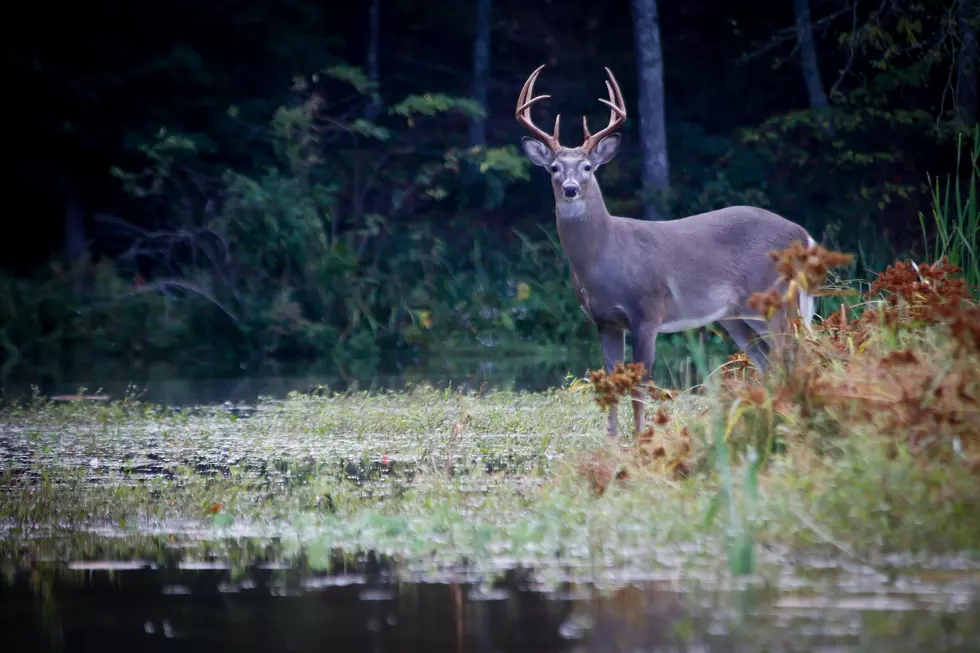
Overharvesting of bucks has created a significant imbalance in Michigan's deer herd. In some parts of the state, the buck-to-doe ratio can be as high as 10 to 30 does for every buck. A healthier, more balanced herd is generally considered to have roughly one buck for every two to three does. The goal of the new approach is to help move Michigan's deer herd closer to that balance.
One Buck Rule? DNR Says Hunters Can Earn Another

The 2026 deer hunting season will be the final year of the two-buck rule in Michigan's Lower Peninsula. Beginning with the 2027 season, the DNR will implement a one-buck limit, while also launching a pilot program that gives hunters an opportunity to earn a second buck tag.

According to the Michigan Department of Natural Resources, the new one-buck rule changes how deer licenses can be used. A combo license allows hunters to harvest either one antlered deer and one antlerless deer, or two antlerless deer. A single deer license allows the harvest of either one antlered deer or one antlerless deer.

The DNR’s pilot program gives hunters in five southern Lower Peninsula Zone 3 counties the opportunity to earn a second buck. The counties are Barry, Hillsdale, Ingham, Kalamazoo and Lapeer. To participate, hunters must first purchase a deer license and then choose to enroll in the program by paying an additional $40 for residents or $28 for senior residents.

To become eligible for the second buck tag, hunters must first harvest an antlerless deer. The bonus buck will also be subject to a four-point antler point restriction.
👇BELOW: Michigan's 2025 Car - Deer Accidents: Crashes Per County👇
Michigan's 2025 Car - Deer Accidents: Crashes Per County
Gallery Credit: Scott Clow
More From 97.9 WGRD